
Understanding Bleach Shade Guides
Bleach shade guides are essential tools for dentists‚ standardizing tooth color matching during bleaching and restorative work for optimal aesthetic results.
What is a Bleach Shade Guide?
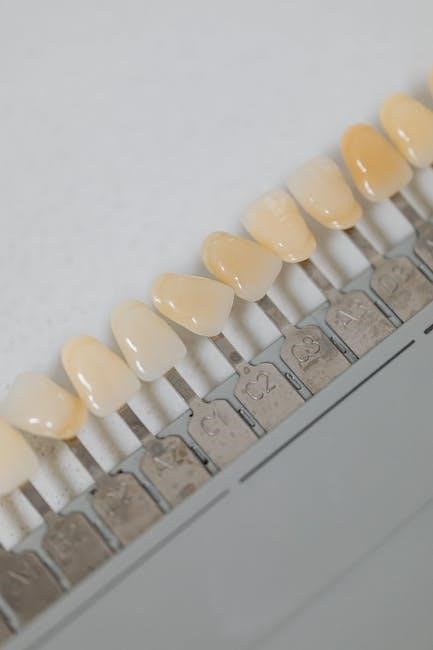
A bleach shade guide is a specialized colorimetric tool utilized by dental professionals to systematically select and communicate tooth shades achieved after whitening procedures. Unlike traditional shade guides designed for natural teeth‚ bleach guides contain a range of shades specifically representing the lighter spectrum attainable through bleaching.
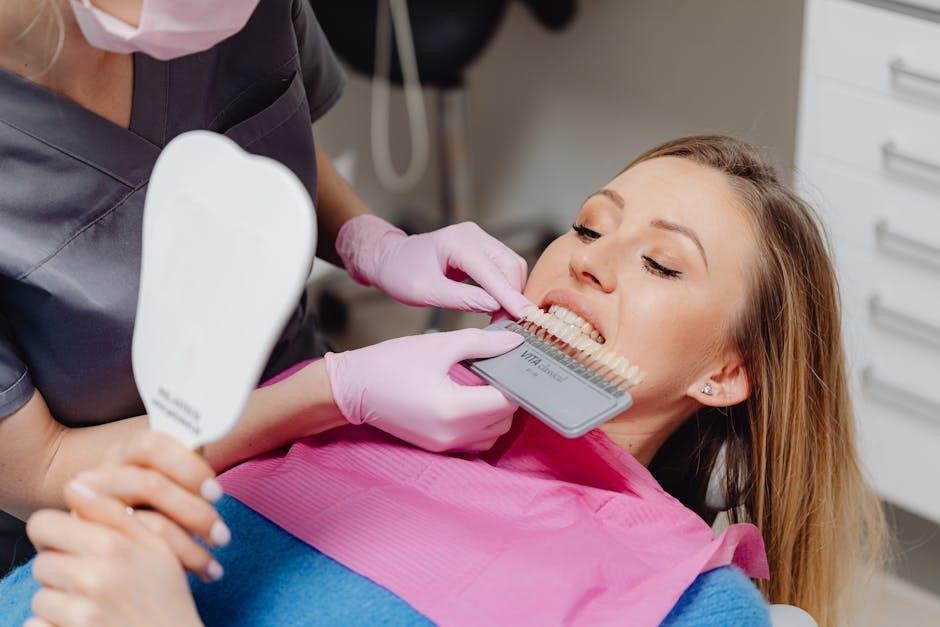
These guides‚ like the VITA Bleach Shade Guide or the 3D Master Dental Lab Bleach Shade Guide‚ typically feature a series of porcelain or acrylic tabs‚ each displaying a different shade. They are crucial for ensuring consistent and predictable results‚ allowing dentists to accurately match the desired whiteness and maintain natural aesthetics. The layman’s term for this is the VITA classical shade guide.

The Importance of Shade Matching in Bleaching
Precise shade matching is paramount in tooth bleaching to meet patient expectations and achieve aesthetically pleasing outcomes. Utilizing a bleach shade guide ensures a standardized approach‚ minimizing subjectivity and facilitating clear communication between the dentist and the dental lab.
Selecting the correct shade before‚ during‚ and after treatment allows for predictable results‚ especially when restorative work like veneers or crowns is planned. Accurate shade selection‚ using guides like the Portrait IPN‚ helps individuals choose their desired whitening shade. Failing to match shades can lead to dissatisfaction and the need for adjustments‚ highlighting the guide’s critical role in successful bleaching.

Types of Bleach Shade Guides
Bleach shade guides include VITA Classical‚ VITA Bleach‚ 3D Master‚ and options like R-20 and R-27‚ each offering varying color palettes for precise matching.
VITA Classical Shade Guide
The VITA Classical Shade Guide is a foundational tool in dentistry‚ often referred to as “the teeth color chart” by patients. Dentists utilize this guide extensively for selecting appropriate shades when performing various restorative procedures‚ including the placement of dental veneers‚ crowns‚ implants‚ dentures‚ and even tooth fillings.
Its importance lies in providing a standardized system for color communication between dental professionals and dental laboratories. While primarily designed for natural tooth shades‚ it serves as a crucial reference point when considering the desired outcome of tooth whitening. Understanding the VITA Classical system is key‚ as conversion charts‚ like the Dentsply Sirona IPN chart‚ often relate bleach shades back to this established framework.
Essentially‚ it’s the benchmark against which bleached teeth are often evaluated and compared‚ ensuring a harmonious and aesthetically pleasing result.
VITA Bleach Shade Guide
The VITA Bleach Shade Guide is a specialized extension of the classical system‚ specifically engineered to address the unique color ranges achieved through tooth whitening procedures. Recognizing that bleached teeth exhibit shades beyond the scope of natural dentition‚ VITA developed this guide to standardize shade matching in these cases.
It allows dental professionals to accurately select and communicate the desired level of whiteness‚ ensuring predictable and aesthetically pleasing outcomes. This guide is vital because bleached teeth often fall outside the traditional VITA Classical range‚ necessitating a dedicated tool for precise color determination.
Using this specialized guide minimizes discrepancies and helps achieve optimal aesthetic results following bleaching treatments‚ offering a more refined approach to shade selection.
3D Master Dental Lab Bleach Shade Guide
The 3D Master Dental Lab Bleach Shade Guide offers a comprehensive system with 29 distinct colors‚ designed for precise tooth whitening comparisons. This guide aids dentists and lab technicians in effectively communicating shade information‚ ensuring accurate reproduction of desired results. It’s a colorimetric plate used in dentistry clinics for evaluating teeth whitening progress.
Unlike traditional guides‚ the 3D Master system considers variations in hue‚ value‚ and chroma‚ providing a more nuanced approach to shade matching. This expanded range is particularly useful when achieving significant whitening levels‚ where conventional guides may fall short.
Its detailed color spectrum allows for a more personalized and aesthetically pleasing outcome for patients undergoing bleaching treatments.
Other Popular Shade Guides (R-20‚ R-27)
Beyond the VITA and 3D Master systems‚ the R-20 and R-27 tooth whitening shade charts are frequently utilized by dental professionals. The R-20‚ featuring 20 colors‚ serves as a practical tool for tracking teeth whitening courses and monitoring patient progress. Similarly‚ the R-27 offers an expanded palette of 27 shades for more refined comparisons.
These guides‚ often available through suppliers like Tankredrug‚ function as color comparators‚ assisting dentists in selecting appropriate shades for restorations or evaluating bleaching outcomes. They are designed for professional use in dental labs and clinics.
Both R-20 and R-27 provide a cost-effective alternative for shade assessment.

Components of a Shade Guide
Shade guides assess tooth color using hue‚ value (lightness)‚ and chroma (intensity) – key elements for achieving natural and aesthetically pleasing results.
Hue
Hue defines the basic color of the tooth‚ categorized generally into shades like A (reddish-brown)‚ B (yellowish)‚ C (greyish)‚ and D (greyish-brown). Bleach shade guides‚ such as VITA and 3D Master‚ meticulously represent these variations. Understanding hue is crucial because bleaching often shifts teeth towards a yellower hue (B range).
Specifically‚ PW shades (PW2‚ PW4‚ PW7) introduced to meet market demands‚ closely align with the VITA B and A hue ranges. PW2 and PW4 lean towards B‚ while PW7 approaches A. Accurate hue identification ensures the selected restoration or bleached shade complements the patient’s overall complexion and desired aesthetic outcome‚ avoiding unnatural appearances.
Value (Lightness)
Value‚ or lightness‚ refers to how dark or light the tooth appears. It’s a critical component when using a bleach shade guide‚ as bleaching significantly impacts this characteristic. Shades are typically numbered 1-4‚ with 1 being the lightest and 4 the darkest.
Achieving the correct value is paramount for natural-looking results. Bleaching aims to increase value‚ making teeth lighter. However‚ over-bleaching can lead to an unnatural‚ overly bright appearance. Professionals utilize shade guides to precisely assess and document the initial value‚ then monitor changes during the bleaching process‚ ensuring a harmonious final shade. Careful consideration of value prevents an artificial aesthetic.
Chroma (Intensity)
Chroma represents the color intensity or saturation – how vivid or muted the yellow or gray tones are within a tooth. When utilizing a bleach shade guide‚ chroma is assessed alongside hue and value. It’s graded from 1 to 4‚ with 1 indicating the lowest intensity and 4 the highest.
Bleaching generally reduces chroma‚ diminishing the yellow undertones and creating a brighter‚ whiter appearance. However‚ complete removal of all chroma can result in an unnatural‚ almost porcelain-like look. Dentists carefully evaluate chroma to achieve a balanced‚ lifelike shade. Accurate chroma assessment‚ guided by shade tabs‚ is vital for aesthetically pleasing outcomes.

Using a Bleach Shade Guide Effectively
Effective use of a bleach shade guide requires proper lighting‚ patient positioning‚ and understanding individual tooth variations for accurate color matching.
Proper Lighting Conditions
Achieving accurate shade matching with a bleach shade guide hinges critically on optimal lighting. Natural daylight is ideal‚ but often impractical. Therefore‚ utilizing a consistent‚ standardized artificial light source is paramount. Dental operatory lights should be diffused and color-corrected‚ typically around 5500K‚ mimicking daylight’s spectral qualities.
Avoid ambient room lighting‚ as it introduces unwanted color casts. Direct light should be avoided‚ as it can create glare and distort perceived shades. The guide should be positioned close to the teeth‚ and the dentist should view the teeth and guide simultaneously under the same lighting conditions. Consistent lighting ensures reliable and repeatable shade selection‚ minimizing errors and maximizing patient satisfaction with bleaching outcomes.
Patient Considerations
Successful shade matching with a bleach shade guide requires careful patient assessment. Pre-existing dental restorations‚ like crowns or fillings‚ significantly influence perceived tooth color and must be factored in. Discuss patient expectations thoroughly; understand their desired level of whiteness and manage realistic outcomes.
Hydrate teeth before shade selection‚ as dehydration can temporarily alter color. Consider the patient’s skin tone and lip color‚ as these impact the overall aesthetic appearance. Individual variations in enamel translucency and dentin opacity also play a role. A collaborative approach‚ involving the patient in the process‚ enhances satisfaction and ensures the chosen shade complements their unique features.
Guide Maintenance and Calibration
Maintaining bleach shade guides is crucial for consistent‚ accurate results. Regularly clean the guides with a mild disinfectant to prevent color distortion from staining or debris buildup. Store them in a protective case‚ away from direct sunlight and extreme temperatures‚ which can cause fading or discoloration.
Periodically compare your shade guide to known standards or calibrated references. Consider participating in inter-examiner reliability exercises to assess consistency among dental professionals. Replace guides showing noticeable wear‚ damage‚ or color discrepancies. Proper calibration ensures the guide accurately reflects established shade ranges‚ minimizing errors in shade selection and enhancing treatment predictability.
Shade Guide Conversion Charts
Conversion charts‚ like Dentsply Sirona IPN to VITA Classical‚ help translate between different systems‚ especially for PW shades (PW2‚ PW4‚ PW7).
Dentsply Sirona IPN Shade Conversion Chart
The Dentsply Sirona IPN Shade Conversion Chart is a crucial resource for dental professionals utilizing the IPN (Individual Porcelain Nucleation) system and needing to correlate shades with the widely recognized VITA Classical shade guide. This chart facilitates accurate communication between laboratories and clinicians‚ ensuring consistent and predictable aesthetic outcomes in restorative and bleaching procedures.
Specifically‚ the chart addresses the unique PW shades – PW2‚ PW4‚ and PW7 – developed to meet the demands of bleached teeth. PW2 and PW4 align closely with the VITA B hue range‚ while PW7 corresponds more to the VITA A hue range. Utilizing this conversion allows for a seamless transition when matching bleached teeth to existing restorations or when planning new restorative work following a bleaching treatment. Accurate conversion minimizes discrepancies and maximizes patient satisfaction.
Portrait IPN to VITA Classical Conversion
Converting shades from the Portrait IPN system to the VITA Classical shade guide requires careful consideration‚ as Portrait IPN aims to replicate natural dentition with transition shades for precise color matching. The IPN system offers a nuanced approach‚ while VITA Classical provides a standardized reference point.
Understanding the relationship between these systems is vital for consistent results. The PW shades (PW2‚ PW4‚ PW7) within Portrait IPN are specifically designed for bleached teeth‚ bridging the gap between bleached shades and traditional VITA hues. PW2 & PW4 lean towards VITA B‚ and PW7 towards VITA A. Utilizing conversion charts and clinical judgment ensures accurate shade selection‚ especially when combining bleached teeth with restorations based on the VITA system.
Bleach Shades vs. Natural Tooth Shades
Bleach shades‚ like PW2‚ PW4‚ and PW7‚ are specifically formulated to match whitened teeth‚ differing from the A and B hues of natural tooth shades.
PW Shades (PW2‚ PW4‚ PW7)
The PW shades – PW2‚ PW4‚ and PW7 – represent a crucial advancement in bleach shade guides‚ specifically designed to address the unique color spectrum achieved after tooth whitening procedures. These shades were created to meet market demands for accurate matching of bleached teeth‚ which often fall outside the range of traditional natural tooth shades.
PW2 and PW4 closely align with the VITA B hue range‚ offering options for patients achieving lighter‚ brighter whitening results. Conversely‚ PW7 leans towards the VITA A hue range‚ providing a suitable match for those with warmer undertones after bleaching. Utilizing these specialized shades ensures a more natural and aesthetically pleasing outcome‚ as they accurately reflect the post-bleaching tooth color‚ unlike attempting to match with pre-whitening shades.
Understanding Hue Ranges (A‚ B)
When utilizing a bleach shade guide‚ grasping the fundamental hue ranges – A‚ B‚ C‚ and D – is paramount for accurate shade selection. The A range represents reddish-brown hues‚ commonly found in natural teeth‚ and often serves as a baseline for comparison. The B range encompasses yellowish hues‚ frequently appearing after bleaching or in teeth with certain staining.
Understanding where a patient’s bleached teeth fall within these ranges is critical. PW2 and PW4 shades‚ for instance‚ closely tie into the B hue range‚ indicating a yellower tone. PW7 aligns more with the A hue‚ suggesting a reddish-brown undertone. Correctly identifying the dominant hue ensures the final restoration or whitening result complements the patient’s overall complexion and desired aesthetic.

Advanced Shade Matching Techniques
Digital shade matching and spectrophotometry offer precise color analysis‚ enhancing accuracy beyond traditional bleach shade guide methods for optimal results.
Digital Shade Matching
Digital shade matching represents a significant advancement over traditional bleach shade guide reliance‚ employing sophisticated technology to capture and analyze tooth color with remarkable precision. These systems utilize intraoral scanners or digital cameras to acquire detailed color data‚ minimizing subjective interpretation.
The captured data is then processed using specialized software‚ allowing dentists to visualize and compare shades on a calibrated monitor. This technology accounts for factors like ambient lighting and individual perception‚ leading to more consistent and predictable outcomes. Digital shade matching is particularly valuable when dealing with complex cases or when precise color replication is crucial‚ such as with veneers or crowns. It streamlines the process and enhances communication within the dental team and with the dental laboratory.
Spectrophotometry
Spectrophotometry offers the most objective method for determining tooth shade when utilizing a bleach shade guide as a reference point‚ or independently. This technique involves directing a beam of light onto the tooth surface and measuring the wavelengths of light that are reflected back.
This provides a precise spectral fingerprint of the tooth’s color‚ quantifying hue‚ value‚ and chroma with exceptional accuracy. Unlike visual shade matching‚ spectrophotometry eliminates subjective errors caused by lighting conditions or individual perception. The resulting data can be digitally stored and easily communicated to dental laboratories‚ ensuring consistent color reproduction. It’s a crucial tool for achieving highly aesthetic restorative results and accurately tracking changes during bleaching procedures.
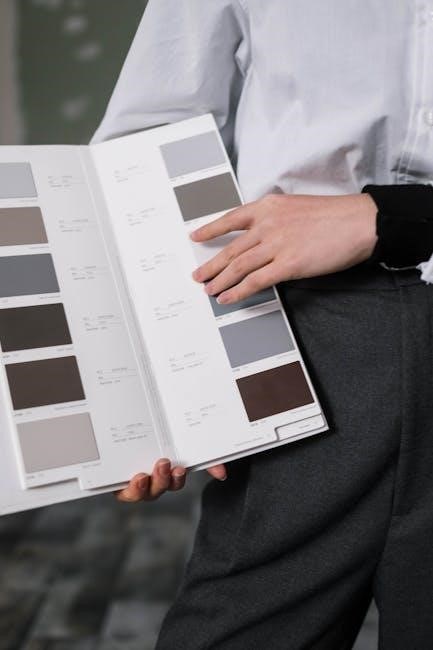
Choosing the Right Shade Guide for Your Practice
Selecting a bleach shade guide depends on procedures offered‚ desired precision‚ and budget; options like VITA‚ 3D Master‚ and R-20 cater to varied needs.
Considerations for Different Procedures
When selecting a bleach shade guide‚ consider the specific procedures your practice commonly performs. For routine whitening‚ a simpler guide like the R-20 might suffice‚ offering 20 essential shades for tracking progress. However‚ restorative work—veneers‚ crowns‚ or implants—demands greater nuance.
Guides like the VITA Classical or 3D Master provide a broader spectrum of shades‚ crucial for achieving natural-looking results that seamlessly blend with existing dentition. The Portrait IPN guide mimics natural teeth‚ aiding in precise matching. Furthermore‚ understanding the difference between bleach shades (PW2‚ PW4‚ PW7) and natural tooth shades is vital.
Procedures involving significant color changes necessitate guides with transition shades‚ simplifying identification of subtle tonal variations. Ultimately‚ the chosen guide should align with the complexity and aesthetic demands of your practice’s services.
Cost and Availability
Bleach shade guide costs vary significantly based on brand and complexity. Basic guides‚ such as the R-20 with 20 colors‚ are generally more affordable‚ often available online through retailers like Amazon for under $50. More comprehensive options‚ like the VITA 3D Master or Portrait IPN‚ can range from $100 to $300 or more.
Availability is typically widespread; most dental supply companies stock popular guides. Online marketplaces offer convenience‚ but verifying authenticity is crucial. Consider purchasing directly from reputable dental suppliers to ensure quality and calibration.
Factor in potential replacement costs‚ as guides can fade or become damaged with use. Regularly calibrating or replacing guides maintains accurate shade matching‚ justifying the initial investment.